News
Nikolai Astrup goes to Japan!

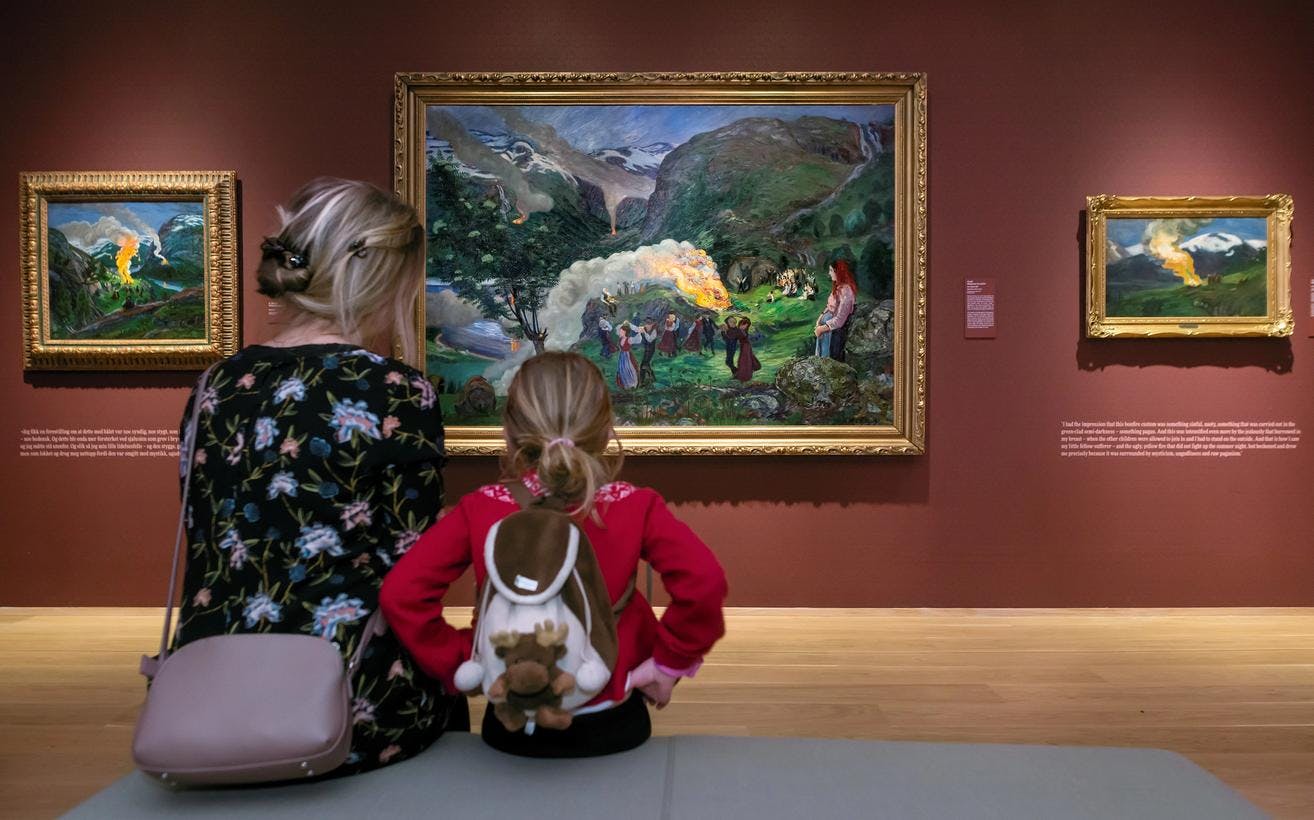
Foto: Dag Fosse / Kode
This winter, Nikolai Astrup’s art travels to Japan!
From November 2026 to December 2027, Astrup’s work will be shown at four different museums, beginning in Tokyo.
Nikolai Astrup (1880–1928) was one of Norway’s most original and beloved artists, and is today experiencing an international breakthrough.
Now, his motifs of Nordic summer nights are once again heading out into the world.
Astrup’s art will meet a Japanese audience at four major museums, with the first exhibition opening in Tokyo on 21 November.
“We believe that Astrup’s art will generate tremendous interest in Japan,” says Kode’s director, Petter Snare.
“Over the past decade, we have seen how Astrup has captivated audiences in Europe and the United States, and it is incredibly exciting to introduce him in Japan. There are links in art history between Astrup and Japan that I think visitors will recognize and be inspired by,” Snare says.
Facts about the exhibition tour
The touring exhibition is a collaboration between Kode, Sparebankstiftelsen DNB, and four Japanese museums: Tokyo Station Gallery, Yamaguchi Prefectural Art Museum, Nagoya City Art Museum, and The Museum of Modern Art, Hayama.
The first venue is Tokyo Station Gallery, opening 21 November 2026.
The exhibition will feature over xxx works from Kode and Sparebankstiftelsen DNB’s collection, works from the Astruptunet collection at Musea i Sogn og Fjordane, and selected private loans.
The curators are senior curator Tove Haugsbø, who also heads the Nikolai Astrup Research Centre for Art and Landscape at Kode, and curator Susanna Pettersson, former director of the Nationalmuseum in Stockholm and the Ateneum in Helsinki.
The Japanese organizer of the tour is the exhibition agency Sankei.
The exhibition will be accompanied by a comprehensive catalogue in Japanese, featuring newly commissioned essays on Astrup’s art by Susanna Pettersson, Tove Haugsbø, Kesia Halvorsrud and Kari Greve, as well as contributions by Japanese curators Mori Mayuko, Yorozuya Kenji, Haruka Morimoto and Hashiguchi Yui.
What the exhibition will show
The exhibition Garden of Growth will present Astrup’s most cherished and iconic motifs: Midsummer Eve Bonfire (Twilight Fire), Early March Morning, Foxgloves and Spring Night in the Garden.
Astrup’s graphic works, which have important connections to Japanese art history, will form a central part of the exhibition.
Most of the works come from the collection owned by Sparebankstiftelsen DNB and deposited at Kode, supplemented by works from Astruptunet and private lenders.
Senior curator Tove Haugsbø notes the strong interest in Astrup’s work among Japanese experts.
“The curators at these museums have deep expertise in European art history, and they have visited Bergen and Astruptunet to immerse themselves in Astrup’s art,” she explains.
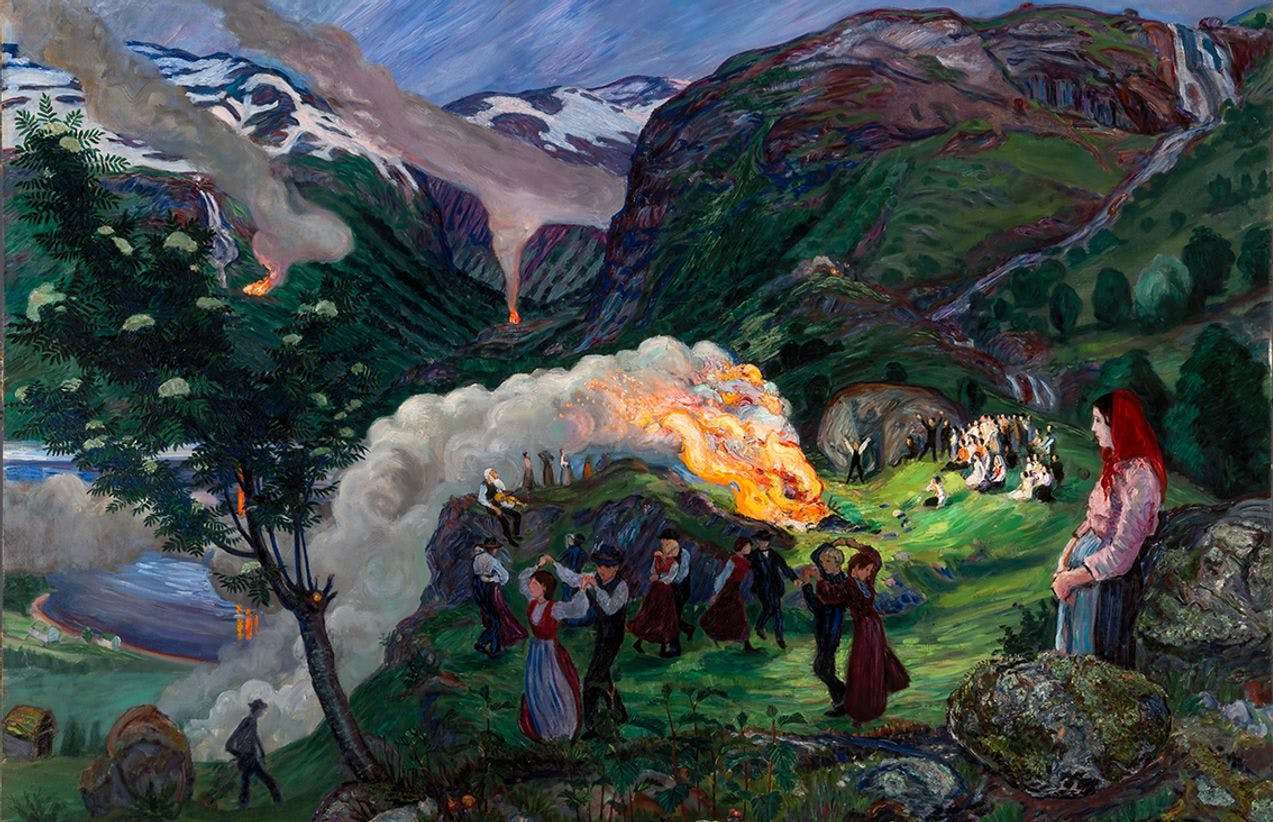
Nikolai Astrup: Priseld / Midsummer Eve Bonfire (1915). Sparebankstiftelsen DNB.
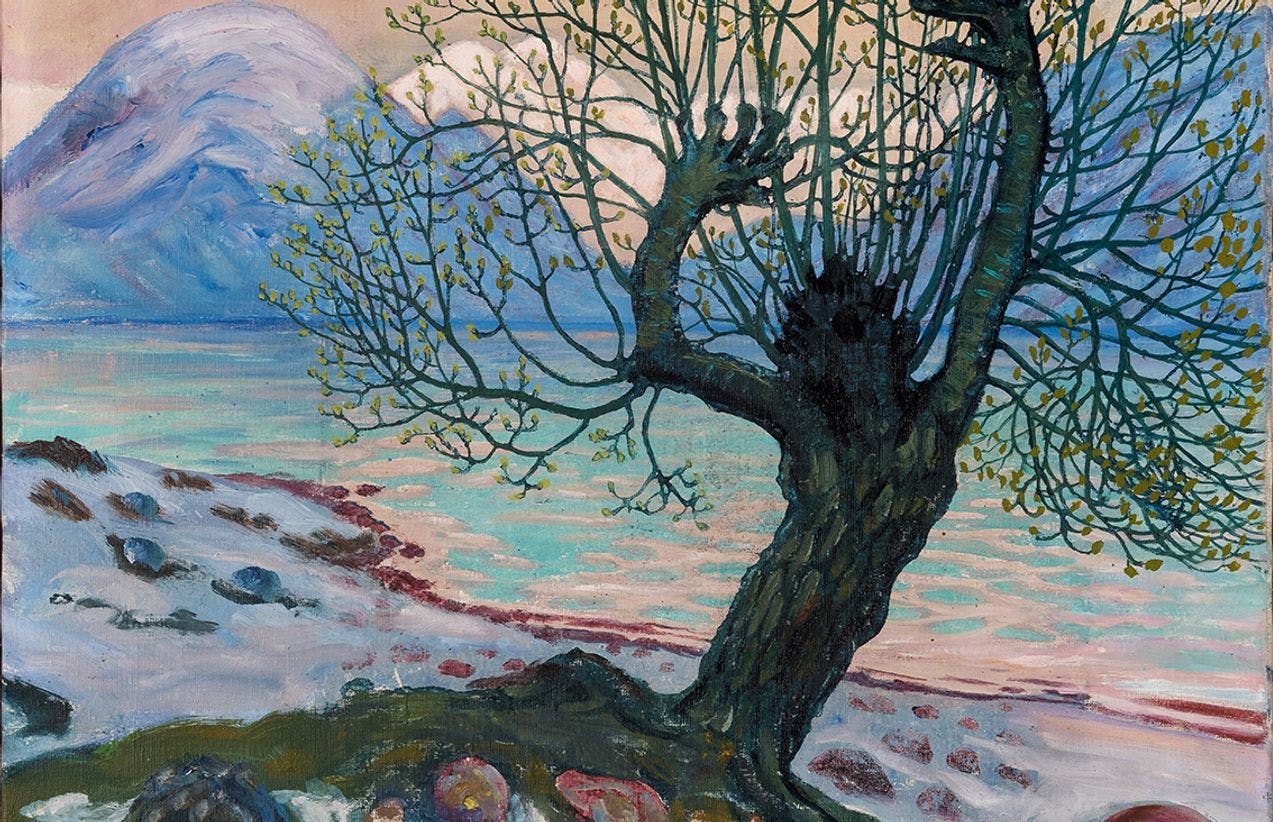
Nikolai Astrup, Marsmorgen / A Morning in March (ca 1920). Sparebankstiftelsen DNB.

Nikolai Astrup: Interiør med vugge / Interior with Cradle (1920-27). Sparebankstiftelsen DNB.
Garden of Growth explores the profound connection between Astrup’s artistic vision and the natural world, highlighting his roles as horticulturist, landscape painter, and printmaker.
“We want to show how Astrup’s art, rooted in the family farm in Jølster and following the rhythms of nature, opens the mysteries of the Nordic night and presents the garden as a malleable, ever-changing space,” says Haugsbø.
“At the same time, the works point to a larger idea: that growth is also about how creativity, craftsmanship and art can take root in the home and give life to new forms of community.”

Videostill. Foto: Sjur Pollen
Still from a film depicting the changing seasons at Astrup´s home in Jølster.

Just as we Japanese have expressed the subtle signs of the changing seasons in short poems such as waka and haiku, Astrup's works reveal how he sensitively captured the subtle variations in Norway's natural landscapes, seasons, and weather. We were captivated by Astrup's delicate sensibility toward nature.
– Akira Tomita, Director of Tokyo Station Gallery and Chairman of The Japanese Council of Art Museums
Astrup’s International relevance
The Astrup Research Centre at Kode and Sparebankstiftelsen DNB has worked over many years to place Nikolai Astrup’s artistic practice in an international context.
Over the past decade, Astrup has been presented in exhibitions at Dulwich Picture Gallery in London, Kunsthalle Emden in Germany, Prins Eugens Waldemarsudde in Stockholm, and The Clark in the United States.
Here you can read the press release about the U.S. initiative from 2021.